
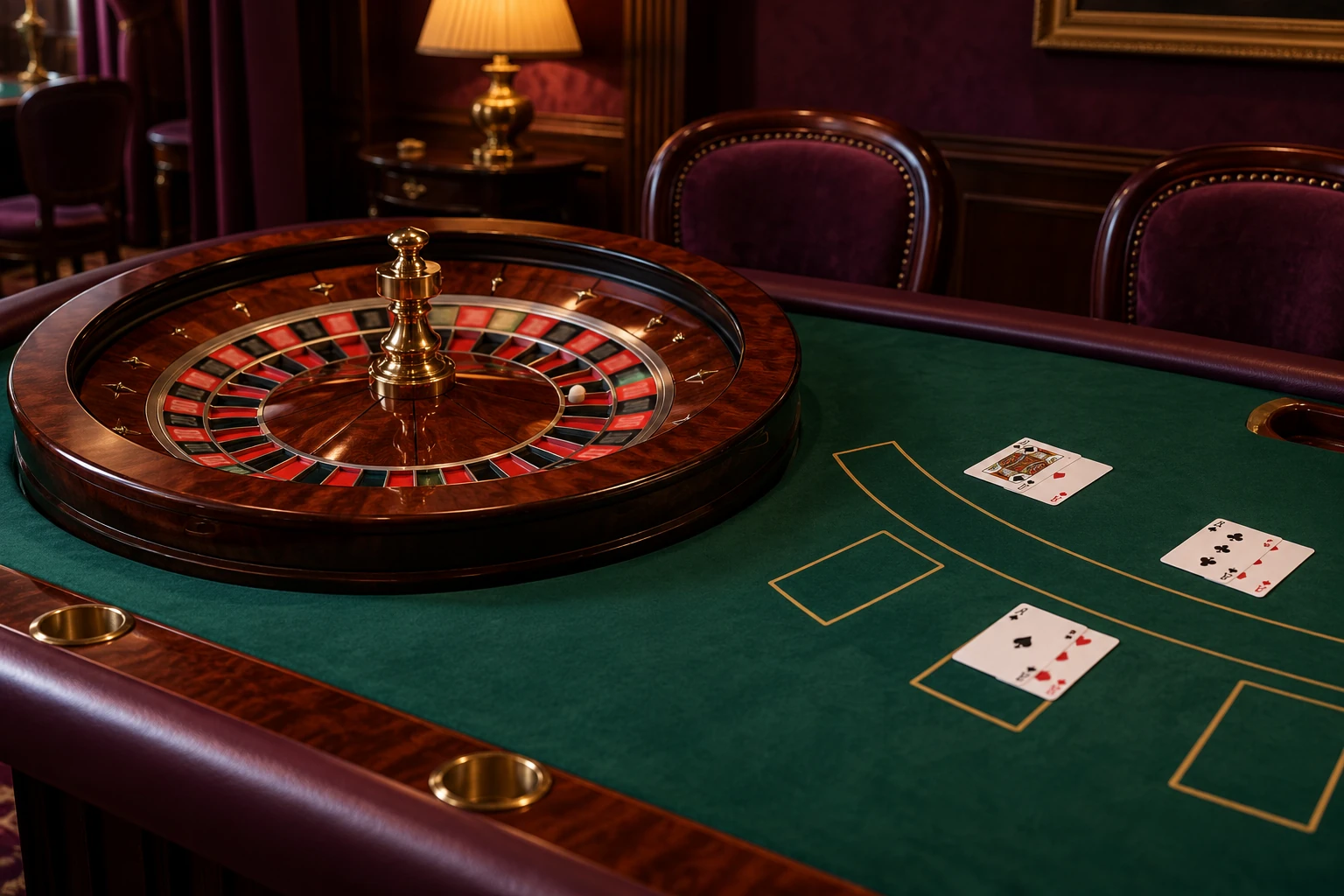
A roulette round ends with one pocket holding the ball, and that single position can belong to several categories at once. A blackjack round moves through a sequence of card totals, and each total is a snapshot rather than the final result. The two games feel similar on a live screen because a dealer, a table and a camera sit in both. Mechanically they describe outcomes in different ways, and neither description makes sense until the exact version is known.
This article separates three layers for each game. The first layer is the table identity. The second is the language used for an outcome, meaning categories in roulette and hand states in blackjack. The third is the settled record, which shows whether an observation was joined to a completed round. Two catalogue references and three external rule pages supply attributed examples where a published source supports the detail.
Identify the exact table version behind the name
The Jackpotter catalogue supplies two compact references. One entry is titled Blackjack and labelled Smartbet, and another is titled D Roulette and labelled SA Gaming. Both sit in the source’s live category. These are external catalogue identities. They show that a game with that title appears in a listed catalogue and names the provider label beside it. They carry no claim about Jackbit stock, any partnership, or the rules of the table once it is dealt.
The title identifies the family; the version supplies the rules used to interpret an event. Evolution’s wheel examples below show why that distinction changes the reading of roulette. Its named blackjack example changes one conspicuous feature of the deal. These examples let a reader compare a family label with a specific published version, while keeping both separate from the Smartbet and SA Gaming catalogue entries.
A comparison can retain four fields per reference: exact title, provider label seen in the source, category and date read. They give the reference a stable identity when it is revisited. A catalogue title and a table rule answer different questions, so both have a place in the comparison.
The two families describe their events in different units. A roulette outcome is a settled position, fixed once the ball rests. A blackjack hand total is a running description of cards drawn so far. A wheel pocket numbered 17 and a hand total of 17 share a numeral and nothing else. One is a physical slot in a wheel. The other is a sum measured against a ceiling of 21, and the same numeral can appear again as a later card changes the total.
Roulette: connect a landing number with a layout category
A roulette report rarely consists of a bare number. Three descriptions sit inside the sentence “seventeen landed”: the wheel position, the categories that contain that position, and the specific bet recorded on the layout. Each can be correct while the other two remain unknown. The number itself is arithmetic. It is odd and it falls between 1 and 18, and both statements are true of 17 regardless of any table. Whether a given layout offers an odd-number bet, a low-range bet or a red bet depends on how that layout is built, and that is a version question.
Wheel construction adds another layer to the same number. Evolution’s live roulette page describes a European or French wheel numbered 1 to 36 plus a single zero, and an American version that adds a double zero. That difference changes the set of pockets the ball can occupy. A simple illustrative model follows, with every pocket treated as equally likely and no reference to any real table. Under that assumption, a single named pocket occupies one part in 37 on the single-zero structure and one part in 38 on the double-zero structure. The two fractions describe the hypothetical model only. They are not the published odds, return figures or payouts of any live table.
A complete roulette record therefore holds three joined facts. The wheel type identifies which pockets existed. The layout identifies which categories could be selected. The recorded bet identifies which of those categories was actually chosen. Two people watching the same spin can describe the same landing number and reach different conclusions, because one recorded an odd-number bet and the other recorded a bet on a range. Settlement follows the recorded bet, not the numeral by itself.
Blackjack: build the hand total before you judge the round
Evolution’s Always 6 Blackjack page states the traditional goal clearly: beat the dealer without exceeding 21. That sentence gives the direction of the game, and it does not define an individual table. Always 6 provides a concrete example of why the version name matters. The page describes the variant as dealing the dealer a fixed six as the up-card. A reader who knows only the word blackjack would not predict that condition, and the condition belongs to the named variant rather than to blackjack generally.
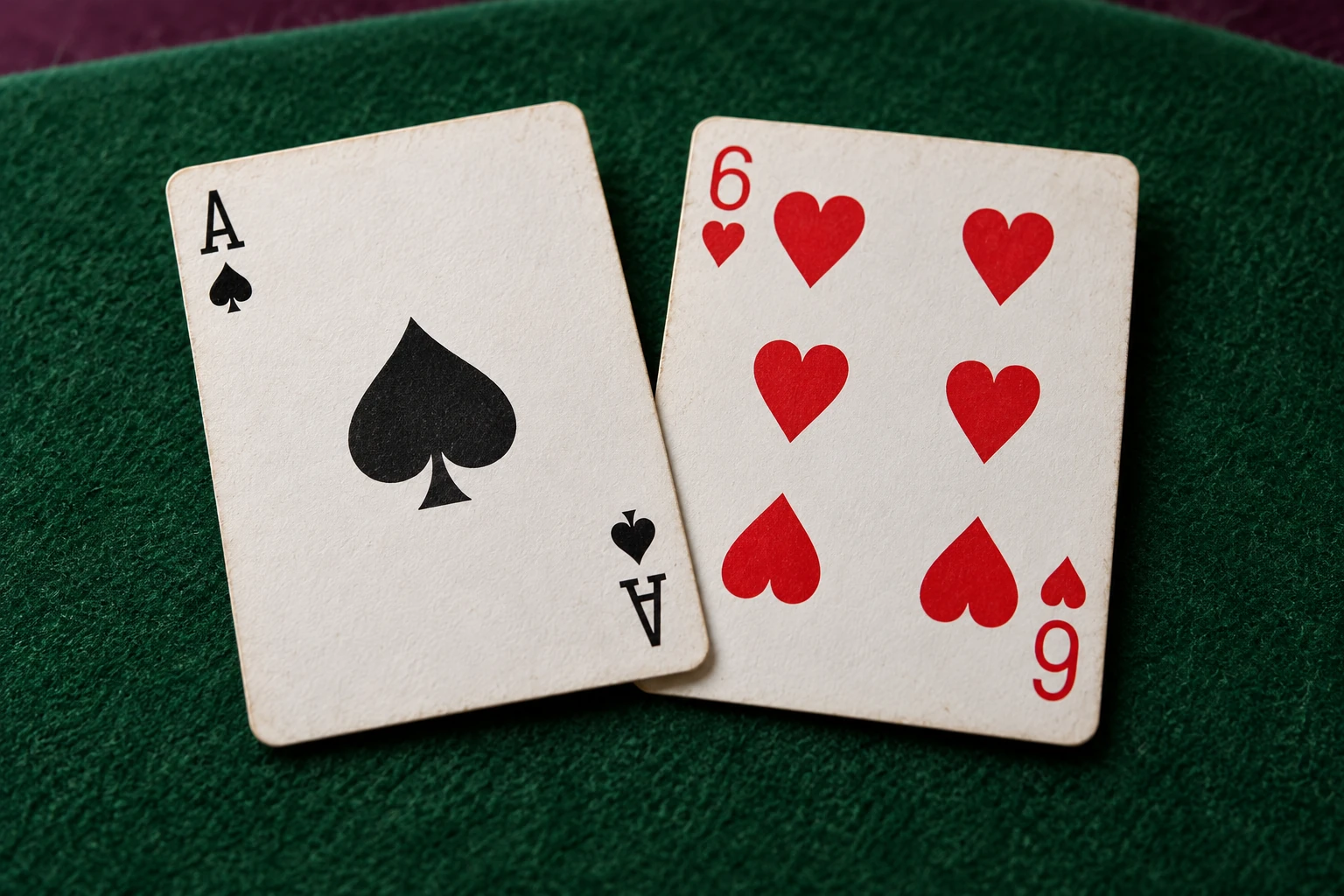
Bicycle’s published blackjack rules provide the card values for the next illustration: face cards count 10, Aces count 1 or 11, and numbered cards count at their pip value. Bicycle defines Hit as taking another card and Stand as ending the turn with the current total. A face card plus six therefore totals 16; a hypothetical four brings it to 20. An Ace plus six can total 7 or 17. These are examples on Bicycle’s stated rules basis, with no action recommended. Their purpose is to show how the cards build a total before a result is considered.
Conditions sit outside the visible total. The cards show a current value, while the rule set determines what actions can follow and how a completed hand is compared. A display of 19 or 20 does not reveal whether the hand has finished drawing. A blackjack report brings the current total together with the opposing hand and the stage reached in the round. The next section turns those separate pieces into an original record exercise.
Read a round as a sequence of records
A round reads better as a small set of joined fields than as a headline. The two exercises below are constructed for this article. No part describes a real Jackbit screen, field name, timing or process.
Start with a hypothetical roulette version called Example A. The reference field reads R-example, the selected number is 17 and the observed number is 17. The reference binds the observation to one round, and the two numbers agree as arithmetic. The outcome entry is separate: its meaning depends on the version and on which category was recorded, so no payout follows from the agreement between the two numbers. Now change one field so the observation carries the reference R-example-2 while the observed number stays 17. The arithmetic still agrees and the record does not, because the reference now points at a different round. Drop the version field and the pocket structure becomes unknown. Each field carries distinct information, and the round is readable only when they join.
Now apply the same method to a hypothetical blackjack version called Example B. The reference reads B-example, the displayed player total is 20 and the displayed opposing total is 18. The dealt cards sit outside this short record. Twenty is two more than 18 and both sit at or below 21. The record shows two observations at an unspecified stage of the hand, and it does not establish that either side has finished drawing. The absent final field cannot be reconstructed from the totals.
Four kinds of evidence appear across a live round. A broadcast picture shows what a camera displayed. An accepted wager shows that a commitment was recorded. A reference with a time label ties an event to a moment. The settled record states how the round finally resolved. Each one answers a different question, and none substitutes for another. When the reference, the recorded wager and the settled entry agree, the round can be treated as a complete unit. When any one of them is missing or mismatched, the observation stays open, however clear the broadcast appeared.
Sources and related reading
External references: Jackpotter supplies the two catalogue identities. Evolution supplies the wheel structures and the named Always 6 example. Bicycle supplies the attributed hand illustration.
For Teen Patti, Andar Bahar and Rummy alongside live tables, read Teen Patti, Andar Bahar and Rummy. The useful distinction to carry forward is the one these pages draw: a category name describes a family, and the rule of an identified version decides what a settled result actually means.